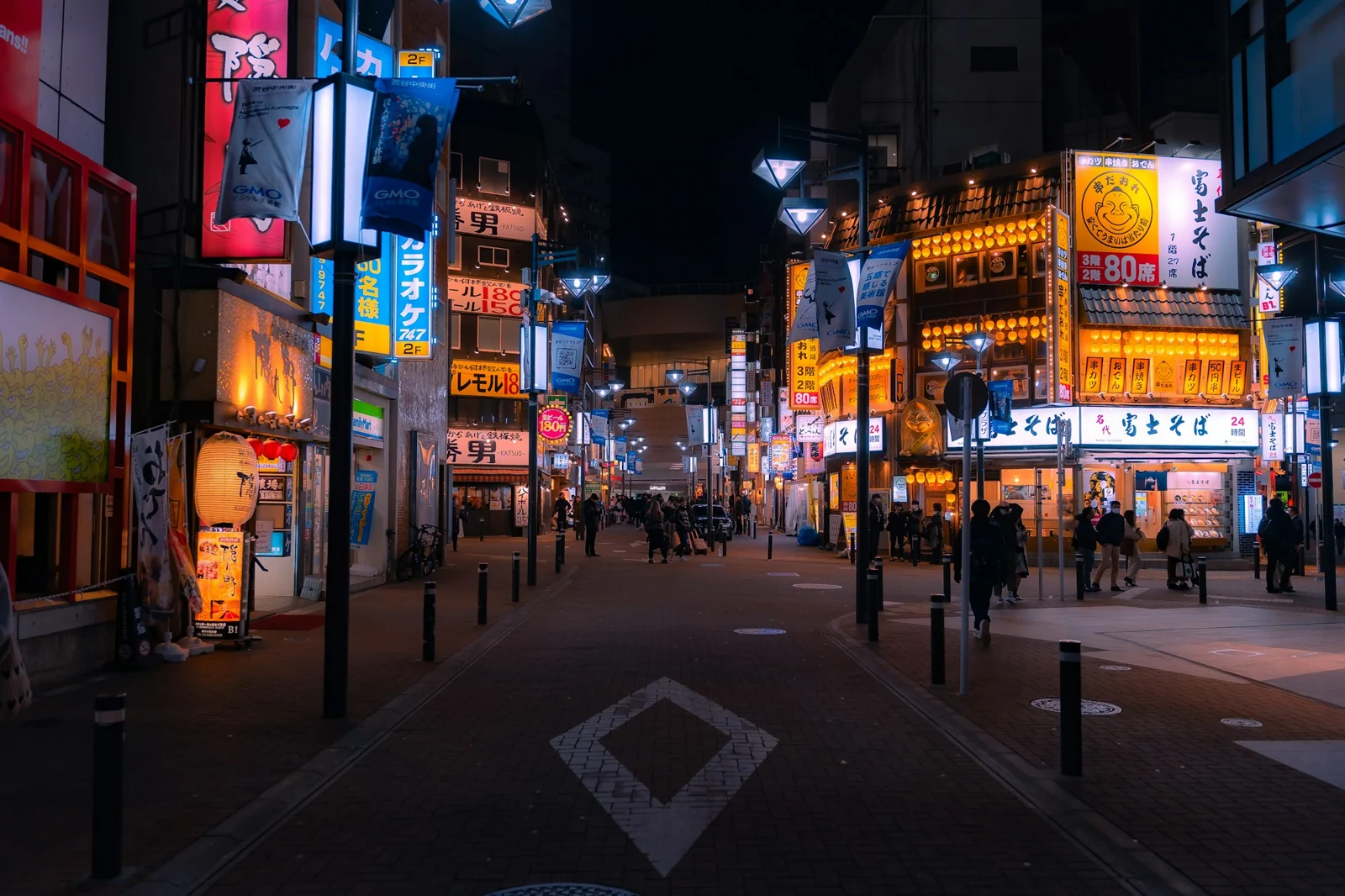
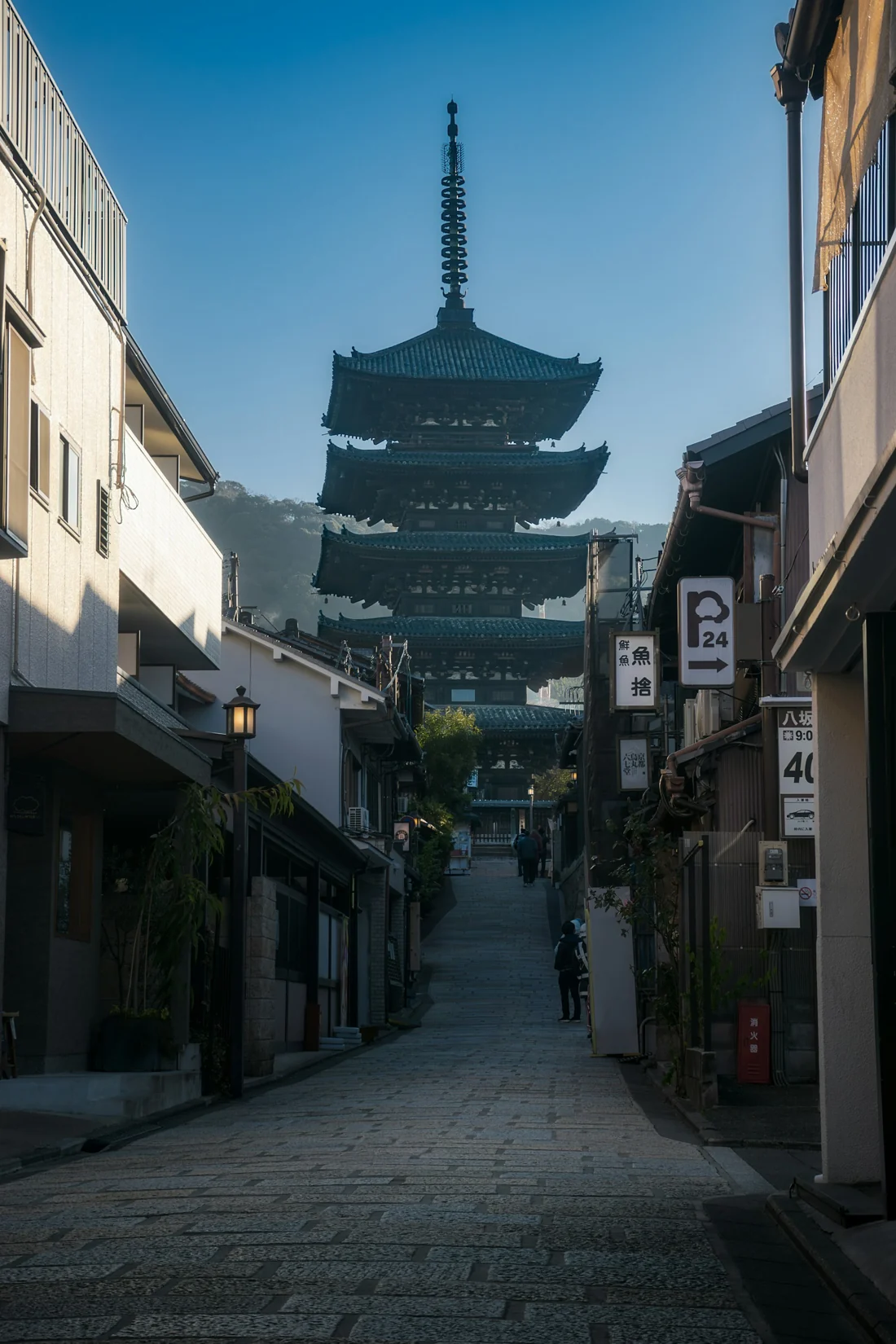
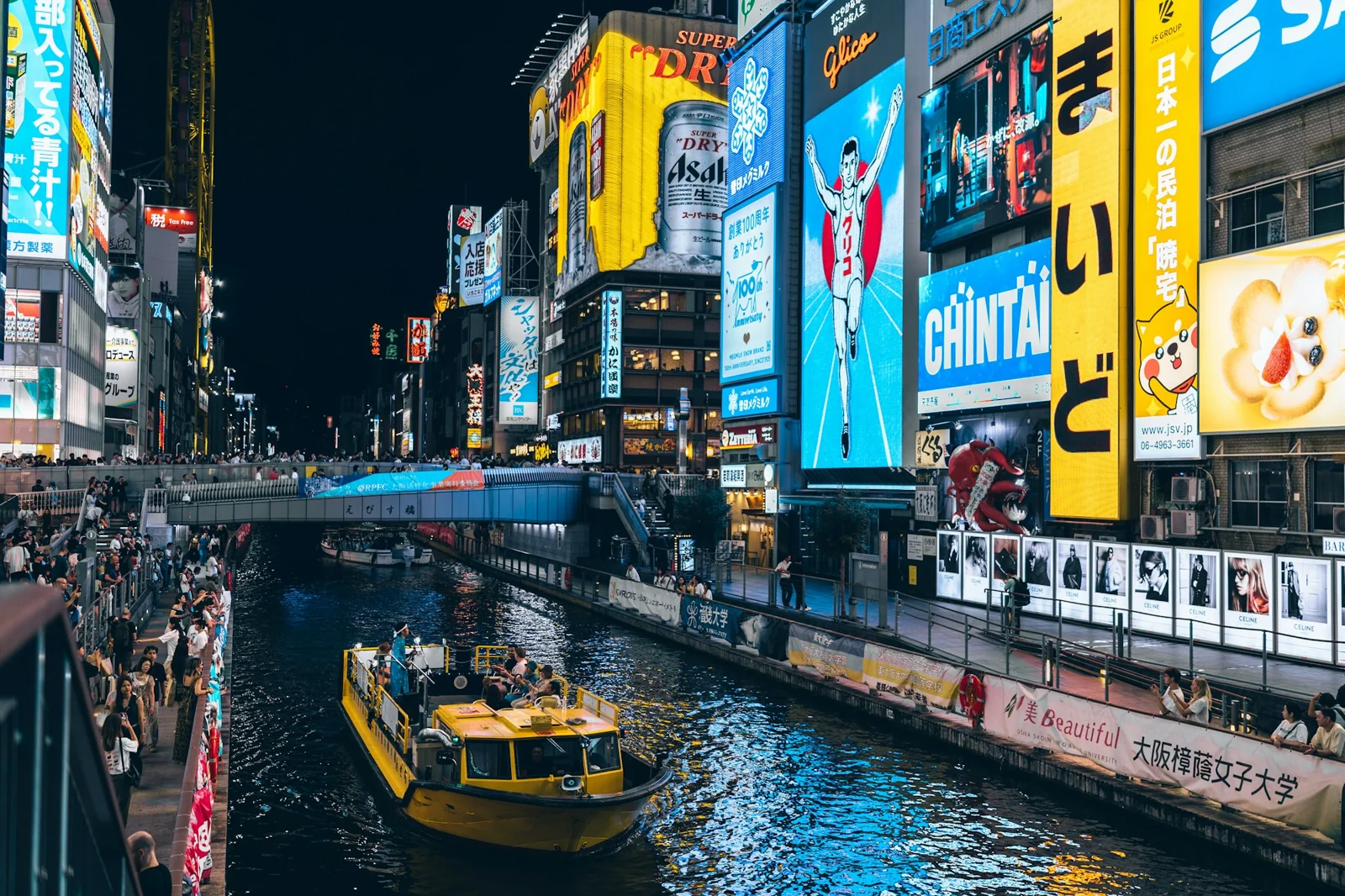
A first Japan trip can easily become a list of places you are rushing to reach. Start with three bases instead: Tokyo for city neighborhoods and theme parks, Kyoto for a change of pace, and Osaka for lively evenings.
Japan’s national tourism organization includes all three on its classic two-week Golden Route. This guide suggests a simpler three-city outline, rather than trying to fit every stop into one visit. See JNTO’s Golden Route.
01 / Start here
Count the travel days first.
Fourteen days including flights is different from fourteen full sightseeing days. Put the actual departure, arrival and return dates on the calendar before assigning hotel nights or attractions. An overnight flight and the time difference can move your arrival to a different calendar day.
Keep arrival day light. Leave room for hotel check-in, luggage and rest. Before the flight home, plan the airport journey from your final hotel—not just the time printed on the airline ticket.
Compare your arrival and departure airports before deciding the order. Tokyo → Kyoto → Osaka is a useful planning sequence; reversing it may suit different flights. If your flights return from your arrival city, account for that final transfer before filling the last day.
02 / The outline
A flexible 14-day Japan itinerary.
Use these blocks as a starting point, then adjust to your flights, energy and priorities. This is an editorial planning example, not a booking schedule or promised prize itinerary.
- Days 1–2
Travel and settle in
Flight, arrival and an easy first evening. Keep the first timed activity away from arrival day.
- Days 3–7
Make Tokyo your base
Explore by neighborhood, fit in Shibuya Sky, and allow one day each for Tokyo Disneyland and Tokyo DisneySea if both are on your list.
- Days 8–10
Change the pace in Kyoto
Allow for the city transfer, then build each day around one area rather than a long checklist of distant sights.
- Days 11–12
Spend time in Osaka
Leave an evening for Dotonbori and space to explore beyond the first photo stop.
- Days 13–14
Leave room for the journey home
Use the final block for your remaining city time, any return-city transfer and the flight home. Your actual flight schedule sets the balance.
03 / Tokyo
Neighborhoods, skyline views, two Disney days.
Start with one neighborhood at a time. Shibuya brings together its famous crossing, shopping, galleries, cafés and restaurants. Shibuya Sky sits above Shibuya Station at Shibuya Scramble Square, making it a natural addition to time spent in the area. Explore the official Shibuya guide.
Check Shibuya Sky’s official ticket information for admission conditions when making plans. Leave space between a timed visit and your next reservation, and check the operator’s updates before you go.
Tokyo Disneyland and Tokyo DisneySea: plan them separately.
If both parks are priorities, give each its own day in your itinerary. A standard 1-Day Passport identifies the park and visit date. Do not assume one standard ticket covers both parks, or that a particular date will remain available. Check current ticket types and the official calendar before fixing your plans. Tokyo Disney Resort ticket details.
04 / Kyoto
Fewer stops. More time to notice.
Choose an area for the day rather than moving between distant sights from morning to evening. Leave time for the streets and small discoveries between the places on your list. A half-empty afternoon can be more useful than another cross-city journey.
Follow local notices and photography restrictions, keep residential streets quiet, and consider luggage storage or forwarding when moving around the city. Kyoto’s official guidance explains how to enjoy the city with consideration for its residents and heritage. Read Kyoto’s responsible-travel guidance.
05 / Osaka
Leave an evening for Dotonbori.
Dotonbori is known for its oversized signs and food scene. Give yourself an evening to explore rather than treating it as a quick photograph between transfers. Keep another part of your Osaka stay flexible for the neighborhoods and attractions that interest you. See the official Dotonbori guide.
On a short trip, a clear priority is more valuable than a packed schedule. Decide what you would regret missing, then leave enough room to enjoy it.
06 / Before you book
Make the practical parts easy.
- Flights first. Confirm airports, local arrival dates and return times before counting hotel nights.
- One area at a time. Group activities geographically to avoid unnecessary cross-city travel.
- Timed tickets next. Put date-specific attractions on the calendar before filling the spaces around them.
- Budget beyond the headline. Set aside money for meals, transport, shopping, optional activities and your personal needs. A simple daily budget is easier to follow than guessing as you go.
- Leave breathing room. Transfers, luggage, queues and rest all take time. Recheck official attraction information before departure.
This guide does not quote flight fares, hotel prices or attraction schedules: those depend on your dates and can change. Use airlines, accommodation providers and attraction operators for the current terms of anything you book.
07 / Common questions
Before your first Japan trip.
Does a two-week Japan trip mean fourteen sightseeing days?
Not when the duration includes flights. Plan around the actual departure, arrival and return dates. This guide leaves flexible travel blocks so the sightseeing does not depend on an unrealistic flight schedule.
Should I visit Tokyo Disneyland and Tokyo DisneySea on separate days?
That is the suggested approach in this guide. A standard 1-Day Passport is for one specified park on a specified date. Check the official ticket options when planning.
Where should I check Shibuya Sky admission details?
Use the operator’s official ticket page for current admission information. Recheck conditions before your visit rather than relying on an old social post or saved screenshot.
Is this the final itinerary for the Japan prize?
No. This is travel inspiration and a flexible planning example. The prize arrangements and travel dates are coordinated with the winner; the official rules describe the campaign.
Does The Departure Circle sell Japan flights or package holidays?
The product sold is The Japan Edit: ten digital wallpapers for $30. Each eligible purchase includes one entry for a chance to win the Japan prize. A purchase does not buy a holiday or guarantee a win. Explore the collection.
The Japan Edit
Bring Japan to your screen.
The Japan Edit is a $30 collection of ten digital wallpapers. Each eligible purchase includes one entry for a chance to win a Japan trip for two.
The prize is 14 days, including flight days, with flights, hotels in Kyoto, Tokyo and Osaka, plus Tokyo DisneySea, Tokyo Disneyland and Shibuya Sky tickets for both travelers. Meals, local transport, shopping and other expenses are not included.
US residents 18+ · 1,200 total entries · One entry per eligible purchase.